KRI NEWS
EXECUTIVE CERTIFICATE IN EDUCATIONAL TECHNOLOGY & CYBERSECURITY
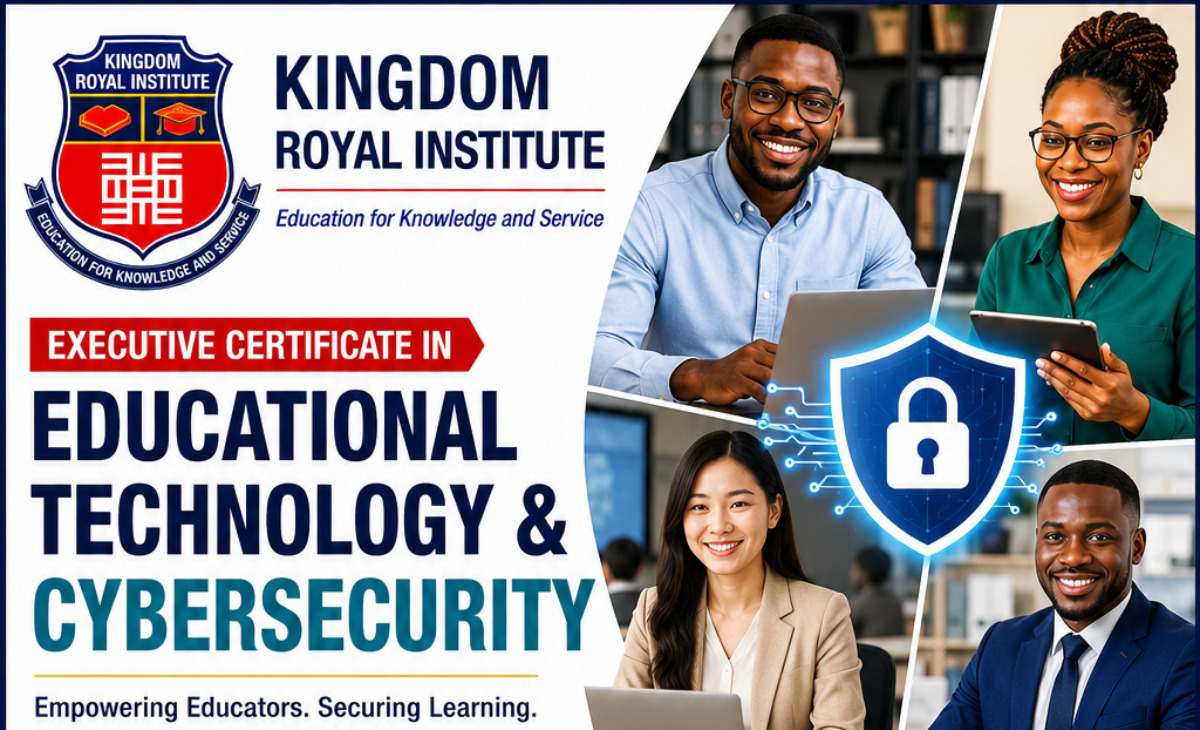
EXECUTIVE CERTIFICATE IN EDUCATIONAL TECHNOLOGY & CYBERSECURITY
Course Description
The Executive Certificate in Educational Technology & Cybersecurity is designed to equip educators, school administrators, ICT coordinators and education professionals with practical knowledge of using technology securely in teaching, learning and school administration.
The programme examines the relationship between educational technology, online learning and cybersecurity, with particular attention to protecting digital classrooms, learning management systems, teacher and student accounts, educational data and online assessments.
Participants will also be introduced to the principles of ethical hacking and authorised security testing in educational environments. The programme emphasises identifying vulnerabilities and recommending appropriate security controls rather than conducting unauthorised attacks.
Artificial Intelligence (AI) is integrated throughout the programme to help participants understand both its educational applications and emerging cybersecurity and privacy risks.
Programme Theme
Securing Teaching, Learning & Educational Technology in the Digital Age
1. Programme Overview
|
Item |
Details |
|
Institution |
Kingdom Royal Institute (KRI) |
|
Programme |
Executive Certificate in Educational Technology & Cybersecurity |
|
Duration |
4 Weeks |
|
Sessions |
3 sessions per week |
|
Total Sessions |
12 |
|
Session Duration |
2 hours |
|
Total Contact Hours |
24 hours |
|
Mode |
Online / Blended |
|
Level |
Executive Professional Certificate |
|
Fee |
GHC1500.00 |
|
Award |
KRI Executive Certificate |
2. Course Description
The Executive Certificate in Educational Technology & Cybersecurity is designed to equip educators, school administrators, ICT coordinators and education professionals with practical knowledge of using technology securely in teaching, learning and school administration.
The programme examines the relationship between educational technology, online learning and cybersecurity, with particular attention to protecting digital classrooms, learning management systems, teacher and student accounts, educational data and online assessments.
Participants will also be introduced to the principles of ethical hacking and authorised security testing in educational environments. The programme emphasises identifying vulnerabilities and recommending appropriate security controls rather than conducting unauthorised attacks.
Artificial Intelligence (AI) is integrated throughout the programme to help participants understand both its educational applications and emerging cybersecurity and privacy risks.
3. Rationale
Educational institutions increasingly depend on:
- Learning Management Systems
- Online classes
- Student information systems
- Cloud platforms
- Digital assessments
- Mobile devices
- Educational applications
- AI-powered learning tools
These technologies create significant educational opportunities but also introduce cybersecurity risks.
A compromised teacher account, insecure online examination system, phishing attack or exposed student database can disrupt teaching and learning and compromise sensitive information.
Therefore, modern education professionals need to understand both the benefits of educational technology and the security measures required to use it responsibly.
4. Programme Aim
The programme aims to develop technology-aware and cybersecurity-conscious education professionals who can implement, manage and protect digital teaching and learning environments.
5. Programme Objectives
By the end of the programme, participants should be able to:
- Explain the role of educational technology in modern education.
- Identify cybersecurity risks associated with educational technology.
- Apply basic security principles to digital learning environments.
- Explain the security requirements of online education.
- Protect teacher and student accounts and devices.
- Identify common threats such as phishing, malware and social engineering.
- Explain the principles of ethical hacking and authorised security testing.
- Identify common vulnerabilities in educational systems.
- Recommend appropriate cybersecurity controls for schools.
- Explain the security and privacy implications of AI in education.
- Develop a basic cybersecurity improvement plan for an educational institution.
6. Learning Outcomes
At the end of the programme, participants should be able to:
- Evaluate the cybersecurity implications of educational technologies.
- Identify vulnerabilities in digital learning environments.
- Apply basic security controls to online education.
- Develop secure practices for teachers and students.
- Explain how ethical hacking supports cybersecurity.
- Conduct basic, authorised security assessments conceptually.
- Recognise common cyber threats affecting schools.
- Assess cybersecurity risks associated with AI-powered educational tools.
- Develop a secure digital-learning strategy.
- Prepare an institutional educational technology and cybersecurity improvement plan.
7. Target Participants
The programme is suitable for:
- Teachers
- Headteachers
- Assistant headteachers
- School proprietors
- ICT coordinators
- ICT teachers
- School administrators
- Education officers
- Educational technology specialists
- University lecturers
- Online course instructors
- Training managers
- Education consultants
- Education entrepreneurs
8. Entry Requirements
Applicants should normally possess:
- A minimum of SHS certificate or equivalent; and
- Relevant educational, professional or work experience where applicable.
No advanced programming or cybersecurity experience is required.
9. Programme Structure
MODULE 1
Educational Technology & Cybersecurity
MODULE 2
Secure Digital Learning & Online Education
MODULE 3
Ethical Hacking & Cybersecurity for Schools
MODULE 4
AI, Digital Security & Educational Cybersecurity Project
This structure gives us a better progression:
Technology → Secure Learning → Ethical Security Testing → AI & Institutional Application
10. DETAILED COURSE OUTLINE
MODULE 1: EDUCATIONAL TECHNOLOGY & CYBERSECURITY
Session 1: Educational Technology in the Modern School
Topics
- Meaning of educational technology
- Evolution of educational technology
- Digital classrooms
- Learning Management Systems
- Mobile learning
- Cloud-based education
- Educational applications
Practical
Activity:
Identify the technologies currently used in a school and classify their
purposes.
Session 2: Cybersecurity Fundamentals for Education
Topics
- Meaning of cybersecurity
- Importance of cybersecurity in education
- Confidentiality, Integrity and Availability (CIA)
- Common school cyber threats
- Vulnerabilities and risks
- Cybersecurity responsibilities of teachers and administrators
Practical
Activity:
Identify five cybersecurity risks in a typical school.
Session 3: Securing Educational Devices & Accounts
Topics
- Password security
- Multi-factor authentication
- Device security
- Software updates
- Antivirus and endpoint protection
- User access and permissions
- Secure use of cloud services
Practical
Activity:
Develop a basic Teacher and Student Digital Security Checklist.
MODULE 2: SECURE DIGITAL LEARNING & ONLINE EDUCATION
Session 4: Security in Online Learning
Topics
- Online education environments
- Virtual classrooms
- Learning Management Systems
- Student and teacher accounts
- Secure authentication
- Access control
- Online learning risks
Practical
Activity:
Identify security weaknesses in a hypothetical online classroom.
Session 5: Protecting Digital Learning Data
Topics
- Student data
- Teacher data
- Assessment data
- Digital records
- Data privacy
- Data storage
- Data backup and recovery
- Secure data sharing
Practical
Activity:
Develop a basic Educational Data Protection Checklist.
Session 6: Cyber Threats Affecting Digital Education
Topics
- Phishing
- Social engineering
- Malware
- Ransomware
- Account compromise
- Online scams
- Cyberbullying
- Fake educational websites and applications
Practical
Activity:
Analyse sample phishing scenarios and identify warning signs.
MODULE 3: ETHICAL HACKING & CYBERSECURITY FOR SCHOOLS
Session 7: Introduction to Ethical Hacking
Topics
- Meaning of ethical hacking
- Ethical hacking versus malicious hacking
- Roles of ethical hackers
- Authorisation and scope
- Vulnerabilities
- Security testing methodology
- Professional ethics
Practical
Activity:
Develop a hypothetical authorised security-testing scope for a school.
Session 8: Security Assessment of Educational Systems
Topics
- Reconnaissance concepts
- Vulnerability identification
- Network security weaknesses
- Web application vulnerabilities
- Authentication weaknesses
- Common security misconfigurations
- Risk classification
Practical
Activity:
Analyse a simulated school system and identify potential vulnerabilities.
Important: Practical security testing should only be performed on systems where the participant has explicit authorisation.
Session 9: Cybersecurity Controls for Schools
Topics
- Firewalls
- Access control
- Authentication
- Endpoint security
- Network segmentation
- Security policies
- Backup
- Security awareness training
Practical
Activity:
Design a basic cybersecurity architecture for a school.
MODULE 4: AI, DIGITAL SECURITY & EDUCATIONAL CYBERSECURITY PROJECT
Session 10: AI in Education & Emerging Cybersecurity Risks
Topics
- AI in teaching and learning
- Generative AI
- AI-powered educational platforms
- AI and student data
- Privacy concerns
- AI-generated scams and phishing
- Responsible AI use
Practical
Activity:
Assess the cybersecurity and privacy risks of an AI-powered educational tool.
Session 11: Developing a Secure Digital School
Topics
- Digital security policies
- Cybersecurity awareness
- Incident reporting
- Digital risk management
- Technology governance
- Cybersecurity culture
- Continuous improvement
Practical
Activity:
Develop a Secure Digital School Framework.
Session 12: Final Project & Presentation
Participants will develop and present:
Educational Technology & Cybersecurity Improvement Project
The project should include:
- Educational institution profile
- Existing technology environment
- Identified cybersecurity risks
- Digital learning risks
- Data protection considerations
- Security controls
- AI considerations
- Cybersecurity awareness strategy
- Implementation plan
- Expected outcomes
11. Teaching & Learning Methods
Because this is a 2-hour-per-session programme, each session should remain focused rather than overloaded.
A typical session can follow:
20
minutes — Concept introduction
30 minutes — Explanation and examples
30 minutes — Case study/demonstration
30 minutes — Practical activity
10 minutes — Review and questions
Methods include:
- Interactive lectures
- Demonstrations
- Educational case studies
- Cybersecurity scenarios
- Simulated security assessments
- Group discussions
- Practical exercises
- AI demonstrations
- School-based projects
12. Assessment
|
Assessment |
Weight |
|
Class participation & practical activities |
15% |
|
Individual assignments |
20% |
|
Cybersecurity case study |
15% |
|
Practical security assessment exercise |
20% |
|
Final Educational Cybersecurity Project |
30% |
|
Total |
100% |
13. Final Project Options
Participants can choose one:
- Cybersecurity Improvement Plan for a School
- Secure Online Learning Framework
- School Cybersecurity Awareness Programme
- Educational Technology Risk Assessment
- School Data Security Plan
- Secure Digital Classroom Framework
- AI Security & Privacy Plan for a School
14. Certification Requirements
To receive the KRI Executive Certificate in Educational Technology & Cybersecurity, participants should:
- Attend at least 80% of sessions
- Complete required assignments
- Participate in practical activities
- Complete the final project
- Present the project
- Meet the required assessment standard
15. Graduate Profile
A successful graduate should be able to:
Use educational technology effectively, identify cybersecurity risks, protect digital learning environments, understand authorised ethical security testing, and develop practical cybersecurity strategies for educational institutions.